Outgrowing off-the-shelf tools/7 min read/By Sébastien/
Custom course platform: when to have one built
You sell courses. Your revenue is climbing. And yet you feel more and more boxed in by your platform.
That is a good sign. It means you have outgrown the tool that launched you. What remains is knowing whether it is time to leave, or not yet.

What moving to custom actually changes
Moving to custom means no longer renting a subscription platform to host your courses, your membership area and your payments, and having a tool that exists only for you built instead. The rent that climbs with your sales stops. Your data stays yours without conditions, and nobody can change or pull the platform out from under you.
The distinction is simple. On a rented platform, you are a tenant. You pay every month to stay.
On a custom platform, you no longer rent your tool. There is still a subscription, for hosting, backups and support. The difference fits in one line: that amount does not go up when your sales go up, and nobody can take the platform away from you.
One clarification we would rather give upfront: handing over the source code is a priced option, not an automatic entitlement. It is taken at the quote, or requested later. Without it, everything else still holds.
This is not a matter of taste. It is a matter of who decides.
Why a rented platform ends up expensive
A subscription platform charges monthly rent, often tied to your volume: number of contacts, students, or sales. Some plans also take a share of every transaction. The result: the better you do, the more you pay, without the tool giving you any more.
At the start, it is painless. You have few students and the base plan is enough.
Then you grow. Your list swells, your sales too. You move up a tier, then the next.
The rent becomes a fixed line that climbs with your success. And that spend builds nothing. It disappears every month.
Over a year, it adds up to a figure: what your tool stack costs you, subscription by subscription, plus the time spent holding them together.
That is the logic of any subscription: you pay to keep using, never to own. We work through that reasoning in our article on the cost of custom software.
The real trigger: when owning starts paying off
Custom becomes relevant when your cumulative monthly rent, over three to four years, goes past the cost of your own platform. At that threshold, carrying on renting means paying for a complete piece of software without ever getting it. That is the moment to run the numbers, not to wait.
Do the sum. Take your current subscription, plus the side tools you wire around it (email, payments, scheduling). Multiply by 36 or 48 months.
The number often surprises. Over several years, a profitable creator spends the equivalent of a real build in rent, sometimes more.
At the end of that period, two situations. The tenant has nothing: they paid to use, and the day they stop, everything goes dark. The other has a platform still running, for a cost that barely moves.
But the trigger is not only financial. It is also strategic.
You leave when the platform stops you doing what you want: a particular learning path, a community mechanic of your own, a buying experience that looks like you. When the tool says no too often, it is time for your own.
What you get back by moving to custom
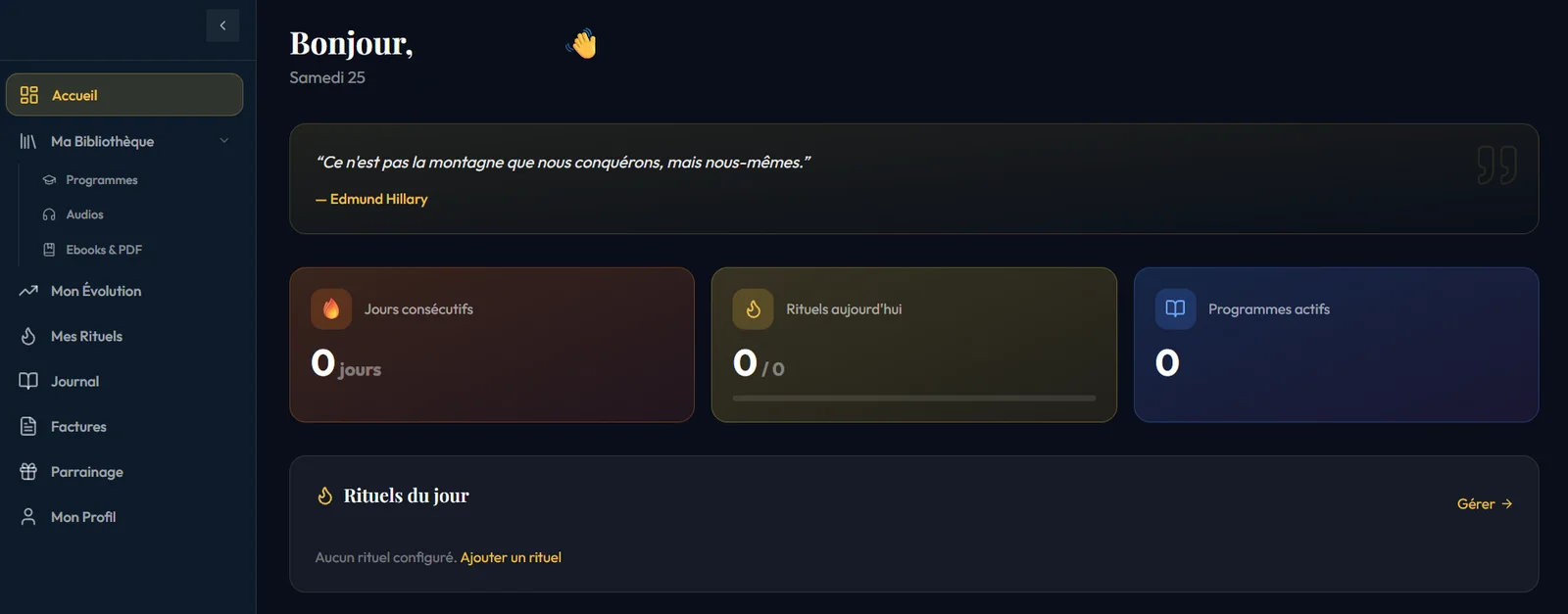
You get back three things a rented platform never fully gives you: a tool that exists only for you, full control of your data and your audience, and the freedom to shape the experience exactly as you imagine it. Three forms of control you give up by renting.
First, your data. On a subscription platform, your students and your statistics live with a third party.
If the platform changes its rules, raises its prices or closes one day, your audience is hard to move. On custom, that base is with you. Nobody can hold it back.
Second, the experience. You are no longer boxed in by the platform's templates.
A custom membership site can follow each student's progress, unlock modules your way, and look like your brand rather than the tool's.
Third, coherence. Courses, membership area, payments and emails live in one system built for you, instead of a dozen tools wired together by hand. A custom course platform is built on exactly that principle.
When you are better off renting
You are better off on a subscription platform when you are starting out, when your recurring revenue is still modest, or when your budget is below the threshold of a custom build. In those cases, renting is the right call: fast, low risk, plenty good enough.
Let us be honest. Custom is not for everyone, and above all not for everyone right now.
If you are launching your first course, a rented platform is perfect. It puts you online in days, with no development.
As long as your monthly rent stays small next to your revenue, renting does the job. Investing in custom at that stage would be premature.
Custom makes sense when three conditions come together: recurring revenue that is established, a platform that genuinely holds you back, and a starting budget in line with real software. If one is missing, wait.
That candour protects you. A serious studio will tell you when it is not the moment, as we explain in our method. Designing software is not the same as coding it: it starts with judging whether it should exist at all, a point we develop in designing is not coding.
Custom is not patched together no-code either
Having your platform built custom means neither assembling no-code blocks nor stacking tools wired together by fragile bridges. It means designing one piece of software, cut for your model, where every part talks to the others natively. The difference in soundness shows in use.
Plenty of creators try a homemade assembly first. A platform for the courses, a tool for payments, another for emails, all glued together with automations.
It holds for a while. Then one link breaks, and the whole chain stops.
No-code has real limits, which we cover in the limits of no-code. Past a certain volume, the soundness of real software becomes necessary.
That is the difference between patching a solution together and owning a system. You can see what that looks like in practice in examples of what we design.
How the move to custom happens
The move happens in stages, without cutting your business off. We first map your current model, bring across your content and your student base, then build the new platform alongside. The final switch is prepared so your customers lose no access.
The number one fear is breaking everything while moving. It is legitimate, and it is manageable.
Your courses and your members are exported, not recreated by hand. Your new platform takes over what exists before adding what the old one would not allow.
During the build, your current platform keeps selling. You lose neither revenue nor students while the work goes on.
So the question is not “is leaving risky”, it is “what does staying cost me”. If you want to put numbers on your own case, come and talk your project through.
Frequently asked questions
Do I lose my students by changing platform?
No, provided the migration is prepared. Your students, your courses and your sales history export, then import into the new platform. The switch happens once everything is checked, keeping the old one live until the last moment. Your members keep their access without interruption.
At what revenue does custom start paying off?
There is no magic threshold, but there is a simple calculation. Add your monthly rent and your side tools over three to four years. When that total approaches or exceeds the cost of a build, owning becomes smarter than renting. Below that, stay on your subscription.
Does a custom platform cost more in the long run?
The opposite. The upfront investment is higher than a subscription, but it ends. After that, you only pay light hosting and maintenance, with no rent climbing with your sales. Over several years, whoever builds spends less than whoever rents, and nobody can change the rules of their tool or take it away.
Can I keep my current automations and email tool?
Yes. A custom platform can handle email sending, payments and automated sequences directly, or connect to the tools you already like. The difference: everything is designed together from the start, instead of being wired after the fact by bridges that break easily.
Curious what this would look like for you?
What we describe here, we have put in place for businesses that have nothing in common. Tell us about yours, and we will tell you what it changes day to day.
Tell us about your business